
Teaching, tutoring, and course creation resources
Practical guidance for teachers, tutors, course creators, schools, parents, and students.
Most popular
Based on real article views.

How to Build an SAT Error Log That Changes What Students Practise
A useful SAT error log does more than record wrong answers: it identifies why an answer went wrong, how confident the student felt, when to revisit it, and which question to practise next. This guide gives teachers, tutors, parents, and students a practical structure for turning mistakes into targeted study decisions.

How to Create a Diagnostic Test Before a Course Starts: A Practical Blueprint for Tutors
A strong course-start diagnostic is not a mini mock exam. It is a short, deliberate evidence-gathering tool that helps tutors identify starting points, form flexible groups, and choose first-week work without reducing a learner to one score.

Best AI Tools for Teachers in 2026: Choose the Right Tool for Each Workflow
The best AI tools for teachers are not interchangeable. This workflow-based guide compares practical options for planning, content creation, feedback, differentiation, and administration—while keeping teacher judgement at the centre.
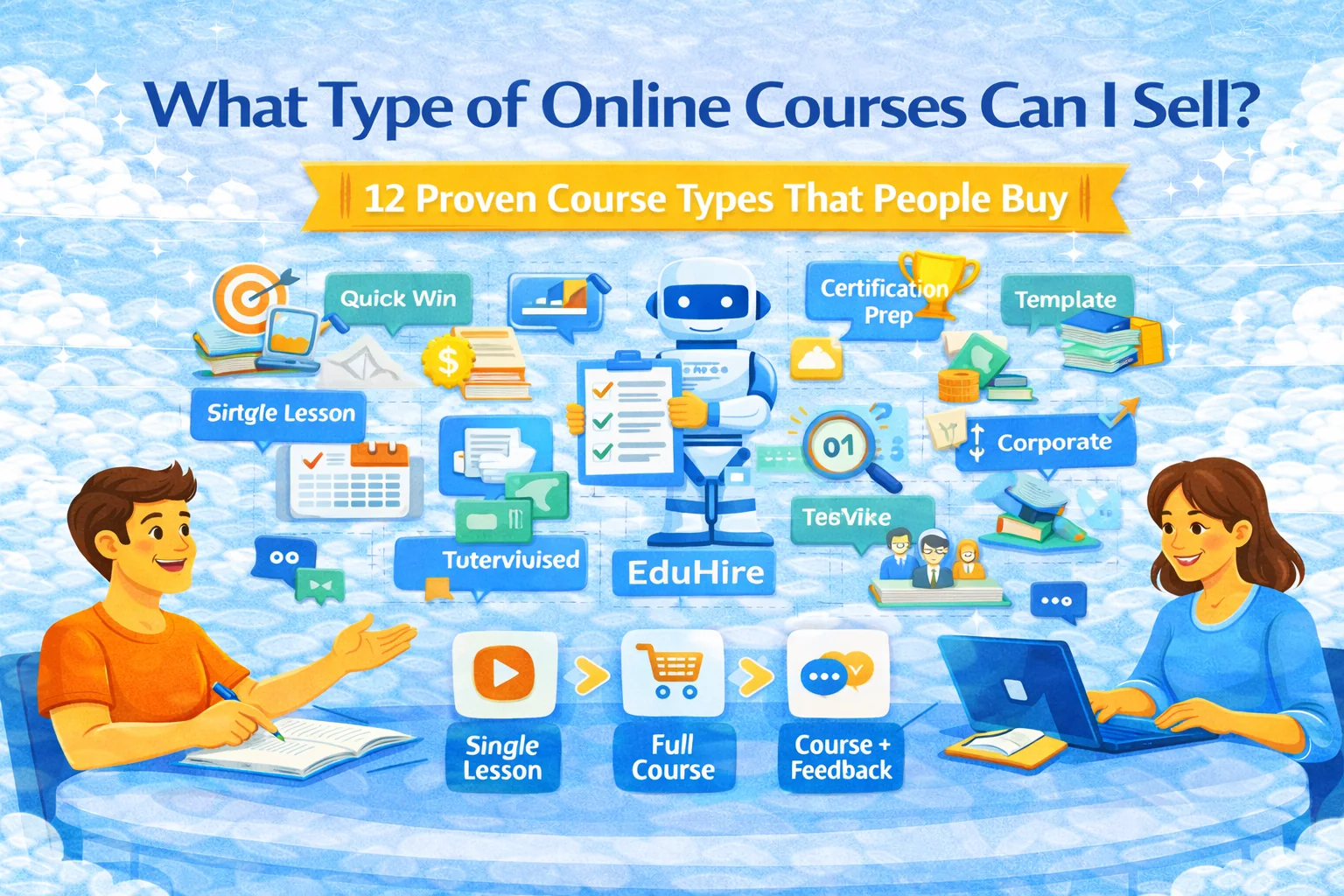
12 types of online courses you can sell—and how to choose yours
Not sure what kind of online course to sell? Here are 12 course types that reliably convert—plus a quick framework to choose the right niche, validate demand, price it, and sell it on SubSchool as a full course or even single lessons.

Write a tutor bio that proves fit without vague claims
A strong tutor bio makes it easier for suitable students and parents to understand what you teach, how you teach, and whether your support fits their goals. Use a clear structure, specific proof, and an honest teaching approach to create a profile that attracts better-fit enquiries.

Evaluate AI grading by evidence, rubrics, uncertainty, privacy, and teacher control
AI grading tools can reduce repetitive marking work, but the right choice depends on more than speed. Use this framework to compare response formats, rubrics, evidence, uncertainty, privacy, and teacher override before adopting a tool.

Best AI Course Creators: Turn a Generated Outline into a Real Learning Workflow
The best AI course creator is not simply the one that writes the fastest first draft. Compare how each platform structures content, supports editing and assessment, delivers learning through an LMS, and prices the workflow before choosing.
How Teachers Should Promote Their Social Media in 2026 (Without Feeling Like a Cringey Influencer)
With the continued growth of social media and the increasing importance of technology in education, promoting oneself as a teacher on social media is becoming increasingly important

Tutoring Session Notes Template: Record What Moves Learning Forward
A practical tutoring session notes template should capture the learning outcome, misconceptions, evidence, next task, and a parent-ready summary. This guide shows independent tutors what to record, what to leave out, and how to turn brief notes into better follow-up teaching.

How to Write a Student Progress Report Parents Can Actually Use
A useful student progress report turns tutoring evidence into a clear shared plan: what changed, what is getting in the way, what parents can do, and what comes next. Use this practical structure to write reports that inform without overwhelming families.
All articles

How to Audit AI-Generated Quiz Questions Before Publishing: A Teacher Checklist
AI can speed up question drafting, but it cannot take responsibility for what students are assessed on. Use this practical pre-publication checklist to approve, revise, or reject every AI-generated quiz question with confidence.

How to Prove Training Completion Beyond Multiple-Choice Quizzes
A completion record can show that a learner attended or finished a course, but it does not automatically show how they made decisions in a real task. Build a more useful evidence trail by pairing completion data with applied responses, observation, reviewer judgement, and proportionate follow-up.

How to Create an Assessment Policy for an Online School: A Practical Governance Checklist
A strong online-school assessment policy makes decisions more consistent, feedback more usable, and learner evidence easier to govern. Use this practical framework and editable checklist to define assessment purposes, roles, integrity processes, access controls, retention, and review.

Checklist for Auditing an Automated Assessment Workflow Before You Scale It
Use this practical audit checklist to examine where automation supports assessment, where educator judgement must remain decisive, and what evidence your team should retain. It is designed for teachers, online schools, and L&D teams reviewing an end-to-end workflow.

What New AI Guidance Means for Course Creators: A Practical Governance Checklist
New international AI guidance is a reason to review your course workflows—not to rush into a blanket policy rewrite. Use this practical checklist to document where AI is used, set learner-facing rules, assign decisions, and schedule review points.

Formative vs. Summative Assessment: A Practical Plan for Better Online Courses
Use formative checks to improve learning while a lesson or course is still in progress, and use summative assessments to evaluate what learners can demonstrate at the end. This guide gives online teachers, tutors, and course creators examples, timing guidance, and a reusable assessment-map template.

Formative vs. Summative Assessment: Design Online Courses That Check Learning Before the Final
Formative and summative assessment have different jobs in an online course: one helps learners and teachers act during learning, while the other gathers evidence at the end. Use this practical design guide and assessment-mapping worksheet to build both into every module.

How to Build Student Portfolios for Online Courses: A Practical Teacher Guide
A well-designed student portfolio turns scattered online-course tasks into visible evidence of learning, reflection, and progress. Use this practical workflow to decide what students submit, how often they reflect, how you assess consistently, and how to set safer sharing boundaries.

AI Privacy Policy for Teachers: A Practical Template for Safer AI Workflows
Use this plain-English AI privacy policy template to decide what learner, parent, assessment, and business information should stay out of generative AI tools. Includes a traffic-light decision system, workflow examples, and a pre-prompt checklist for independent teachers and course creators.